
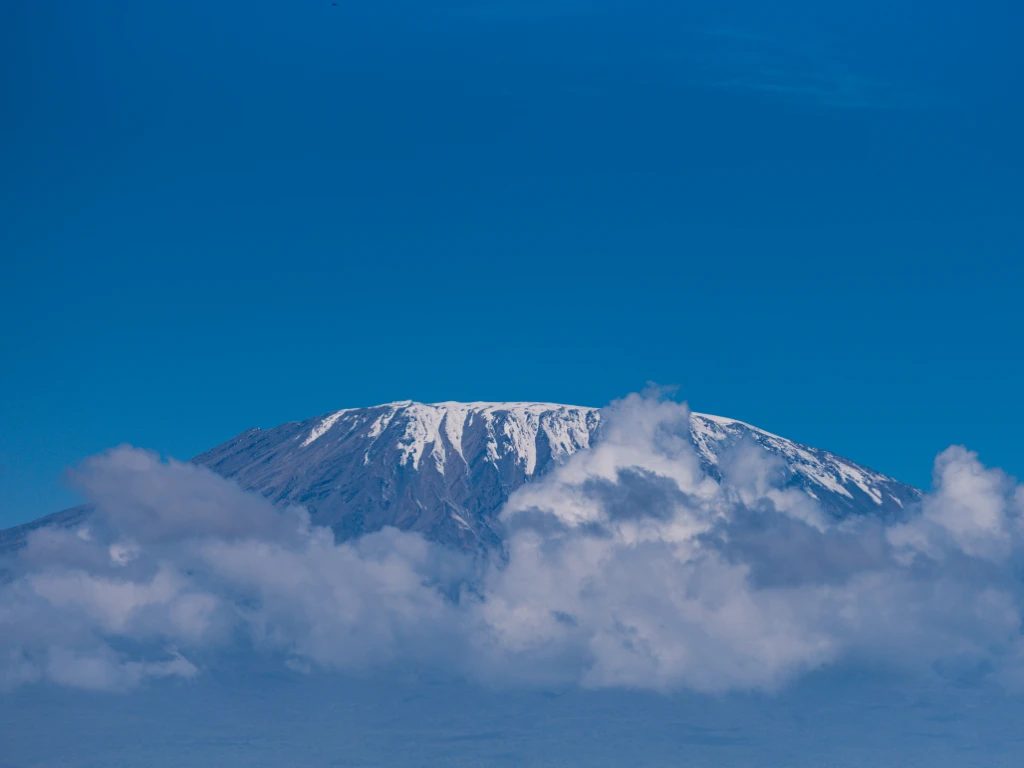
Kilimanjaro: which route is right for you?
Route choice decides your summit odds more than fitness does. The single biggest predictor is how many nights you spend acclimatising.
Kilimanjaro is a walk, not a climb. No ropes, no technical skill, no prior mountaineering. What it demands is time at altitude, and that is exactly what most people try to economise on.
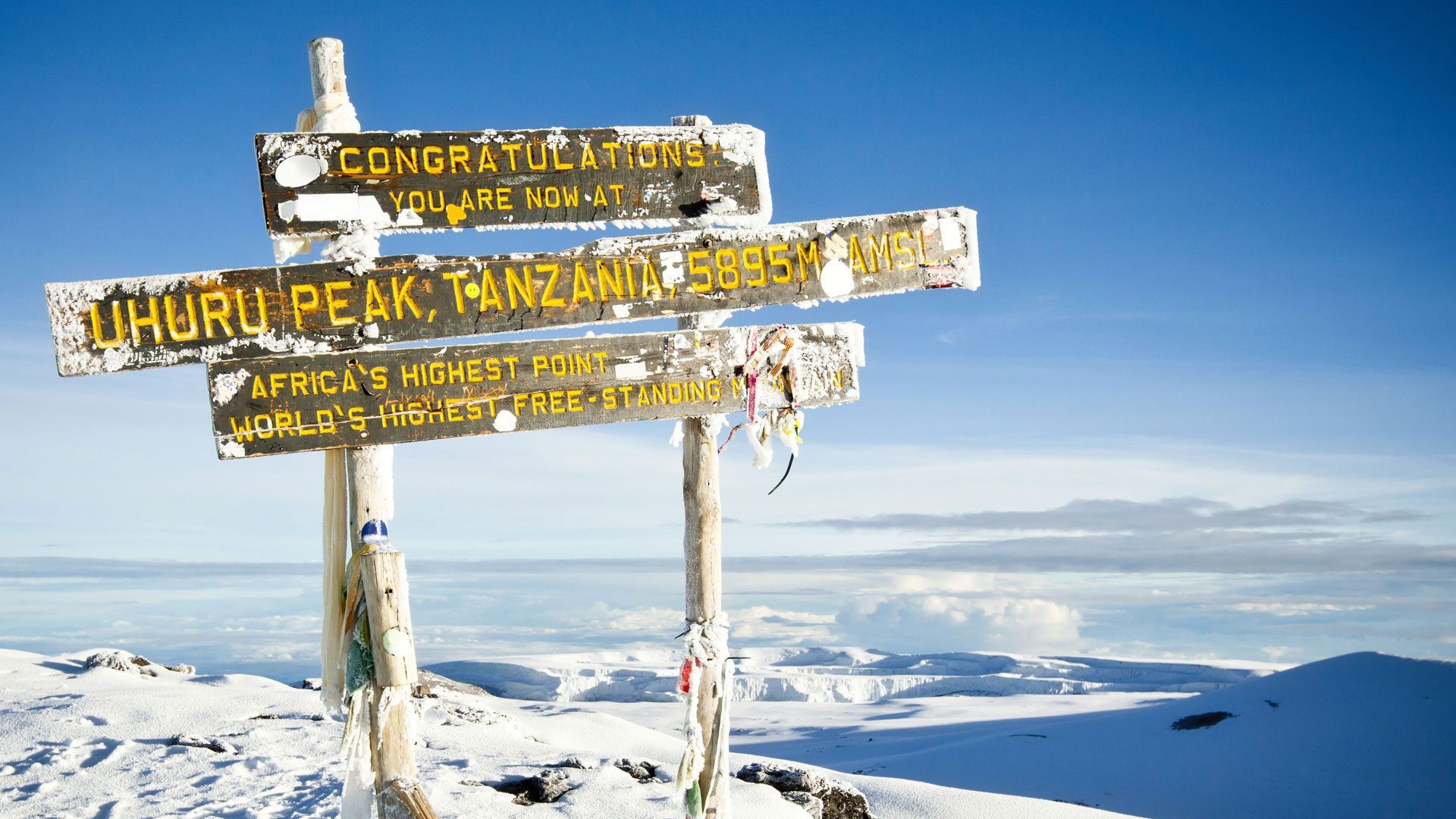
Uhuru Peak stands at 5,895 metres. The air there holds roughly half the oxygen of sea level. Whether you reach it depends far more on the number of nights your route gives your body to adapt than on how fast you can run at home.
This is an honest comparison of the routes, written by someone who walks them. It covers success rates, scenery, traffic, difficulty and cost, and ends with the choice we would make for most first-timers.
- Add days. Success rates rise sharply from six to seven to eight days on every route.
- Lemosho over eight days is the best all-round choice for scenery, acclimatisation and traffic.
- Machame is the most popular and delivers strong success rates at seven days or more.
- Marangu, the shortest and hut-based route, has the lowest summit success rate. Do not choose it for comfort.
- Rongai is the best wet-season and quiet-route option, approaching from the drier northern side.
- Fitness helps with enjoyment. Acclimatisation determines the summit.
The routes compared
Every route converges near the crater rim, so the summit day is broadly similar. What differs is the approach: how gradually you gain altitude, how varied the scenery is, and how many other trekkers you share the trail with.
| Route | Days | Difficulty | Traffic | Best for |
|---|---|---|---|---|
| Lemosho | 7-8 | Moderate | Medium | Best overall: scenery and acclimatisation |
| Machame | 6-7 | Moderate to hard | High | Popular, scenic, strong success at 7 days |
| Northern Circuit | 9-10 | Moderate | Low | Highest success rate, most remote |
| Rongai | 6-7 | Moderate | Low | Wet season, gentler gradient, quiet |
| Marangu | 5-6 | Easiest terrain | High | Hut accommodation, lowest success rate |
| Umbwe | 6 | Hard | Very low | Experienced, well-acclimatised trekkers only |
| Shira | 7-8 | Moderate | Low | Similar to Lemosho, higher vehicle start |
Acclimatisation is the whole game
The principle guides live by is climb high, sleep low. Good routes make you gain altitude during the day and descend to sleep, which is exactly what the Machame and Lemosho profiles do at Lava Tower and around the Barranco Wall.
Six-day itineraries exist because they are cheaper to sell. They also produce the majority of turnarounds we see on the mountain. Adding one night typically lifts summit probability by a meaningful margin, and adding two on the Northern Circuit produces the highest rates on Kilimanjaro.
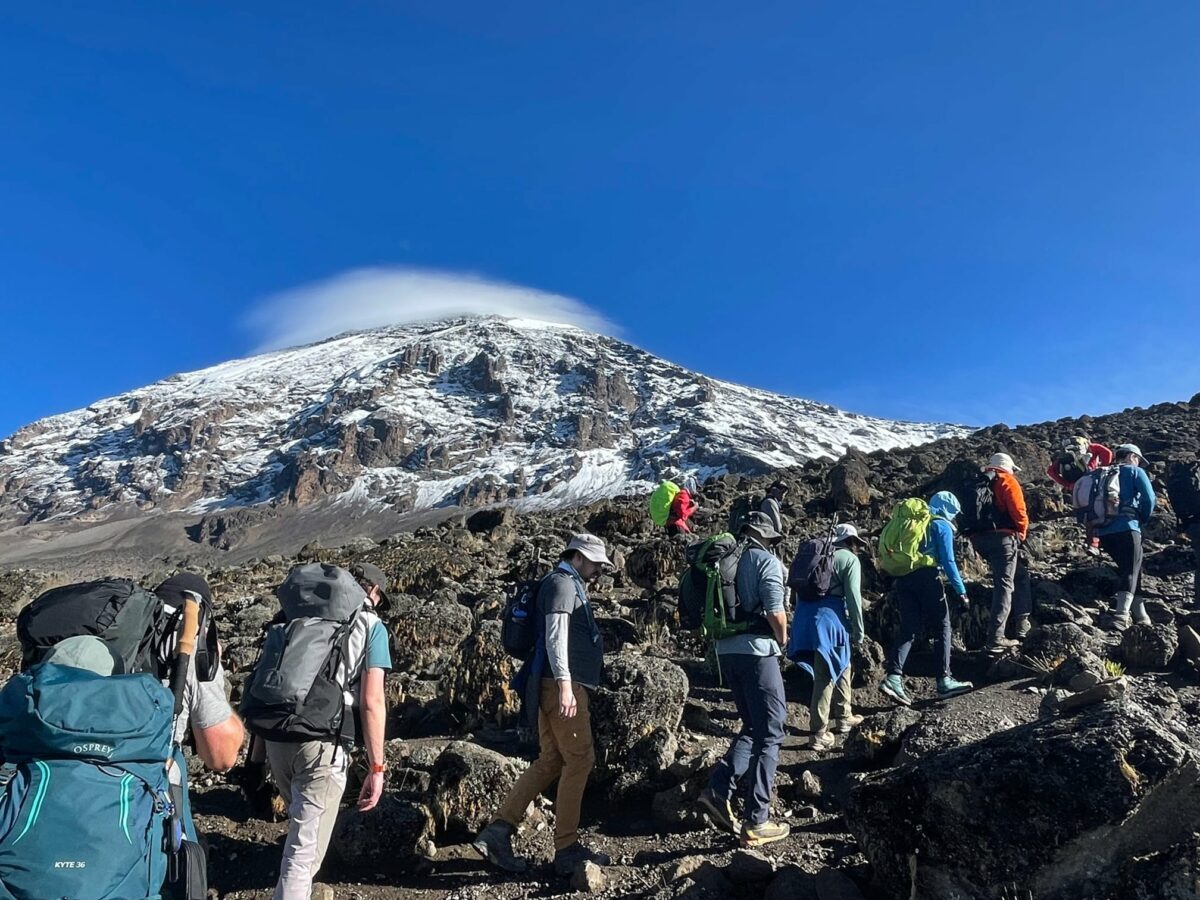
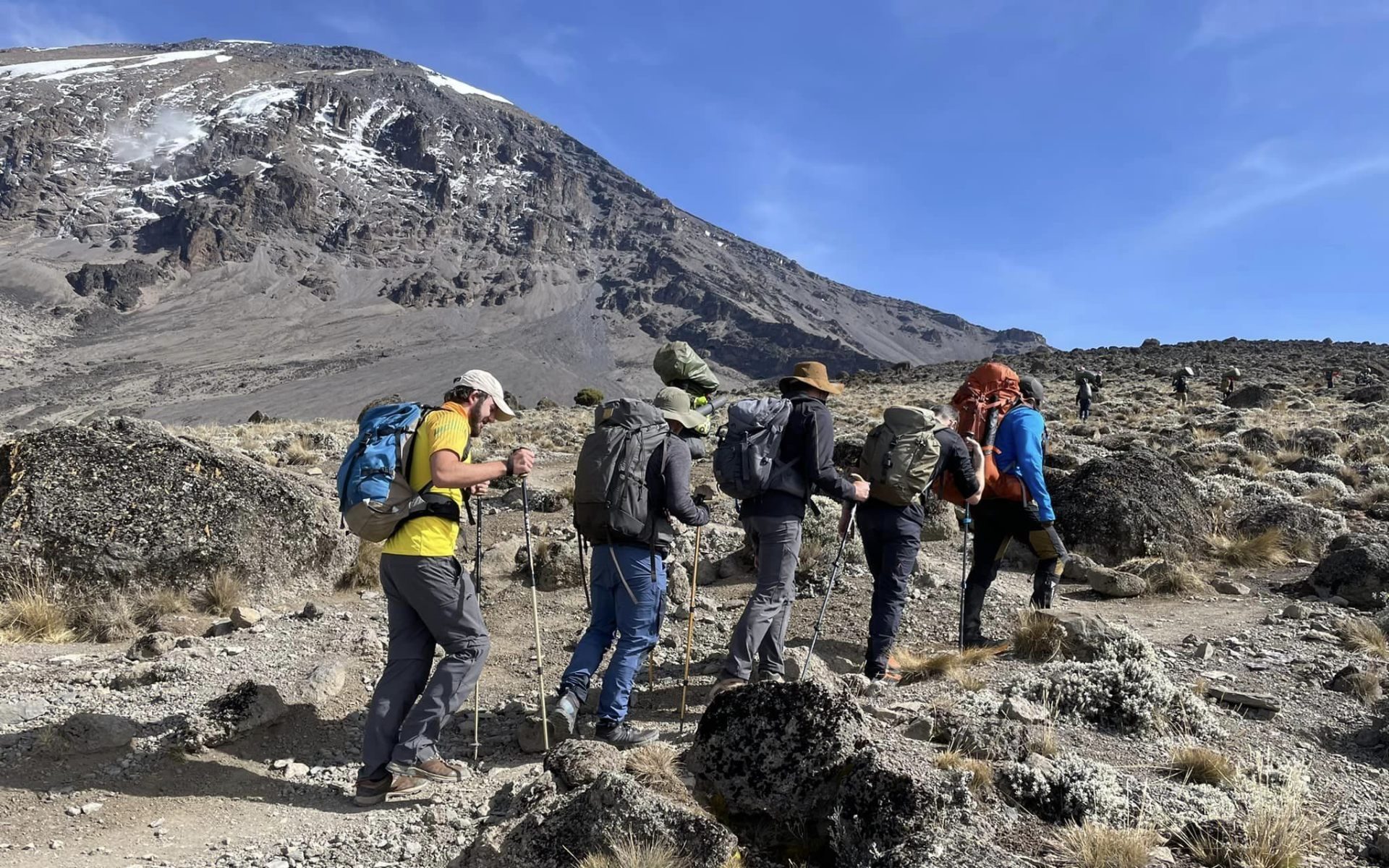
Pole pole, slowly slowly, is not a slogan. Walking at a pace that feels absurdly slow on day one is the single most effective thing you can do for your summit chances, along with drinking three to four litres of water daily and eating even when appetite disappears above 4,000 metres.

Summit night, honestly described
You will be woken around 23:00 at Barafu or Kibo, drink tea, and start walking into the dark in temperatures that can reach minus 15 Celsius with wind chill. The ascent to Stella Point takes roughly six hours of switchbacks on scree, in headtorch light, with the summit invisible for most of it.
From Stella Point, Uhuru is another forty-five minutes along the crater rim, usually as the sun comes up over Mawenzi. Then you descend the same ground you just climbed, and continue down to a lower camp the same day. It is a long, cold, mentally demanding eighteen hours.
This is why we send two guides per small group, carry emergency oxygen and a pulse oximeter, and check saturation twice a day. Turning someone around is a judgement our head guides make without negotiation, and it has never once been the wrong call.
Training and kit
Train for consecutive days of walking rather than for speed. Three to four months of hiking with a daypack, ideally including back-to-back long days on hills, prepares you better than any gym plan. Stair sessions and long walks in the boots you will actually wear are the two highest-value habits.
Break in your boots properly. Blisters end more attempts than altitude does among fit trekkers. Bring a four-season sleeping bag rated to at least minus 10, proper layers including a down jacket, waterproof shell, gloves and liner gloves, and a headtorch with fresh batteries.
Everything else can be hired in Moshi or Arusha at a fraction of the cost of buying it. We send a full checklist with every booking and inspect kit the evening before departure.
- Broken-in waterproof boots and two pairs of good socks per three days
- Down jacket, waterproof shell, thermal base layers, warm hat and gloves
- Four-season sleeping bag, headtorch, trekking poles
- Three-litre hydration capacity, sunscreen, lip balm and sunglasses
When to climb
The two main seasons are January to mid-March and June to October. January to March is warmer, quieter and often clear, with a chance of snow near the summit. June to October is the driest and busiest, with the most reliable conditions overall.
April, May and November fall in the rains. Trails are muddy and the forest section is wet, but the mountain is close to empty. If you climb then, choose Rongai, which approaches from the drier northern side.
Full-moon departures are popular for the light on summit night. They book out early, so decide at least six months ahead if that matters to you.
What we would choose
For a first Kilimanjaro, the eight-day Lemosho. It has the best balance of gradual acclimatisation, changing scenery from rainforest to moorland to alpine desert, and moderate trail traffic until it joins the Machame route.
If you have the days and want the strongest odds, the nine or ten-day Northern Circuit. If you are on a tighter schedule, seven-day Machame, never six. If you are climbing in shoulder rains or you want solitude, Rongai.
Whichever route you take, our crews are paid to KPAP-aligned standards, porter loads are weighed, and every group carries oxygen and a comprehensive first-aid kit. We are happy to send full route profiles and current pricing on request.
Questions we are asked about this
Itineraries built around this
More from the journal



Let us build this into your journey.
Tell us your dates and what matters most to you. A Karis journey designer in Arusha will reply with a tailored route, camps and full pricing.